
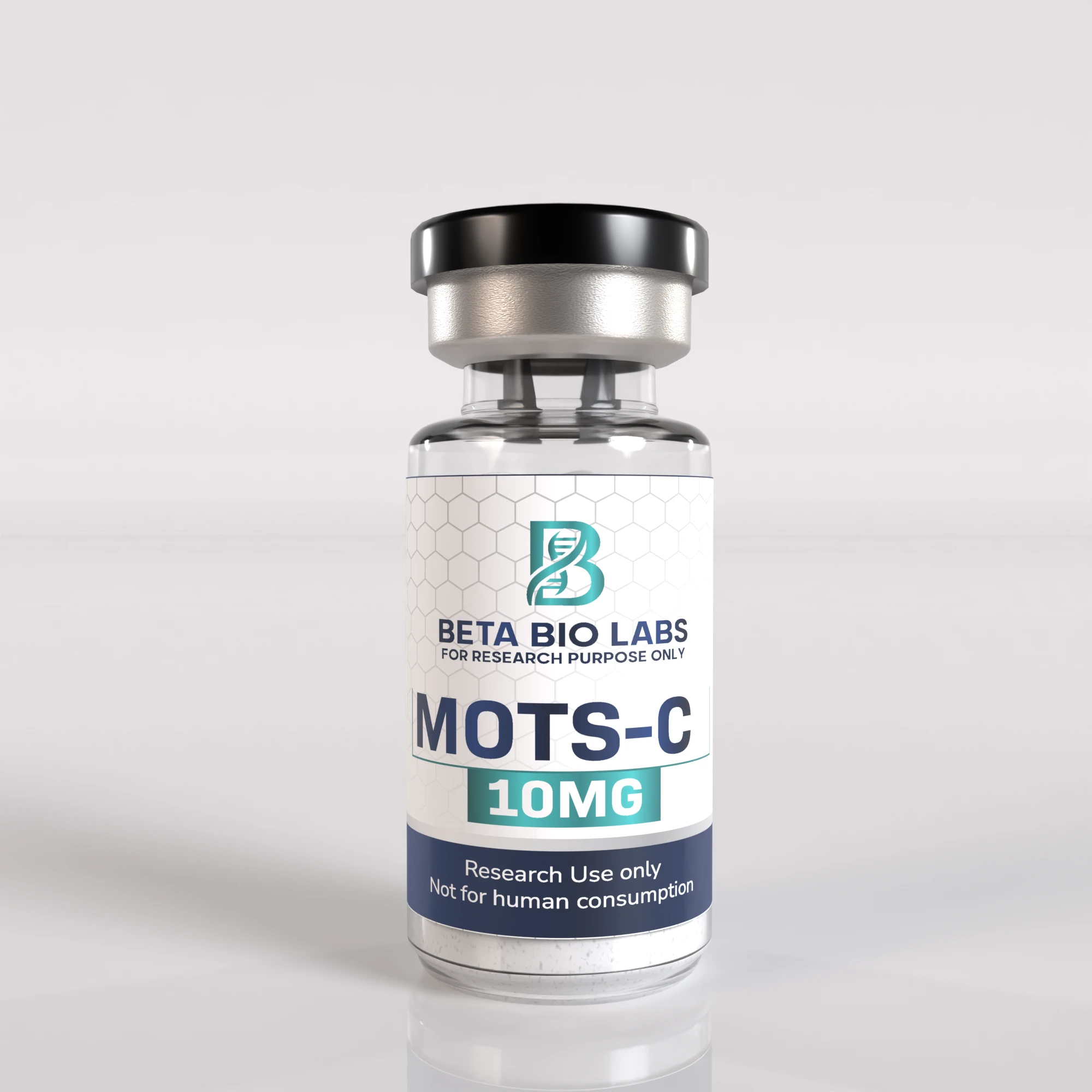
MOT-C 10MG
MOT-C is a chemically synthesized peptide compound designed for scientific investigation. This product is intended exclusively for research purposes under the supervision of qualified professionals in controlled academic or institutional settings. It represents a novel structural variant of motilin, a hormone involved in gastrointestinal motility research. Below are key details regarding its characterization, potential applications, and contextual research considerations.
Research Context
Motilin is a 22-amino acid peptide hormone primarily secreted in the stomach and small intestine, playing a critical role in regulating gastric emptying and intestinal motility. MOT-C differs structurally from native motilin and has been explored in preclinical studies as a tool for investigating gastrointestinal physiology, pharmacology, and potential therapeutic mechanisms. As with all peptides, its efficacy and safety in biological systems remain dependent on proper formulation, storage conditions, and experimental protocols.
Research Overview
MOT-C is synthesized to mimic structural features of motilin while incorporating modifications that may enhance stability or alter binding affinity for receptors. Preclinical studies have demonstrated its utility in functional assays related to gastrointestinal motility, including contractile activity assays, receptor binding studies, and pharmacokinetic evaluations. This peptide serves as a valuable tool for researchers studying gastrointestinal physiology, peptide hormone mechanisms, and potential therapeutic interventions for motility disorders.
Key Research Focus Areas
- Gastrointestinal Motility Studies: Evaluation of contractile responses in isolated tissue preparations or in vivo models, including gastric and intestinal segments.
- Peptide-Receptor Interactions: Binding affinity assessments using recombinant receptors or tissue homogenates to characterize MOT-C’s specificity.
- Pharmacokinetic Profiling: Measurement of peptide stability, metabolism, and clearance in animal models to inform dosing considerations for future research.
- Potential Therapeutic Mechanisms: Exploration of MOT-C’s impact on gastrointestinal disorders, including motility-related conditions such as gastroparesis or functional dyspepsia.
- Structural-Activity Relationships: Comparative analysis of MOT-C’s structural modifications versus native motilin to elucidate functional differences.
Storage and Handling
MOT-C should be stored at -20°C or lower until use. Aliquots should be thawed once and stored at -20°C to minimize degradation. Avoid repeated freeze-thaw cycles, as this may alter peptide integrity. Always use sterile, RNase- and DNase-free containers for storage and handling to prevent contamination. When thawed, solutions should be used immediately or kept on ice for short-term experiments.
Researchers are advised to consult relevant regulatory guidelines for their specific institution or country regarding the handling of biological materials and research chemicals. This product is not intended for clinical, diagnostic, or cosmetic use.
| Property | Specification |
|---|---|
| Molecular Weight | Approximately 1000 Da (calculated for the peptide backbone) |
| Purity | ≥ 95% by HPLC and mass spectrometry |
| Peptide Structure | Cyclic or linear variant of native motilin (sequence modifications for stability) |
| Solubility | Soluble in 0.1% trifluoroacetic acid (TFA) or DMSO; may require dilution for biological assays |
For research use only. Not for human or animal consumption.
The content provided herein is for informational purposes only and does not constitute endorsement, recommendation, or guarantee of any therapeutic or research application. Researchers must adhere to ethical standards, institutional policies, and local regulations governing the use of experimental materials.
| Size | 10MG |
|---|

Reviews
There are no reviews yet.