
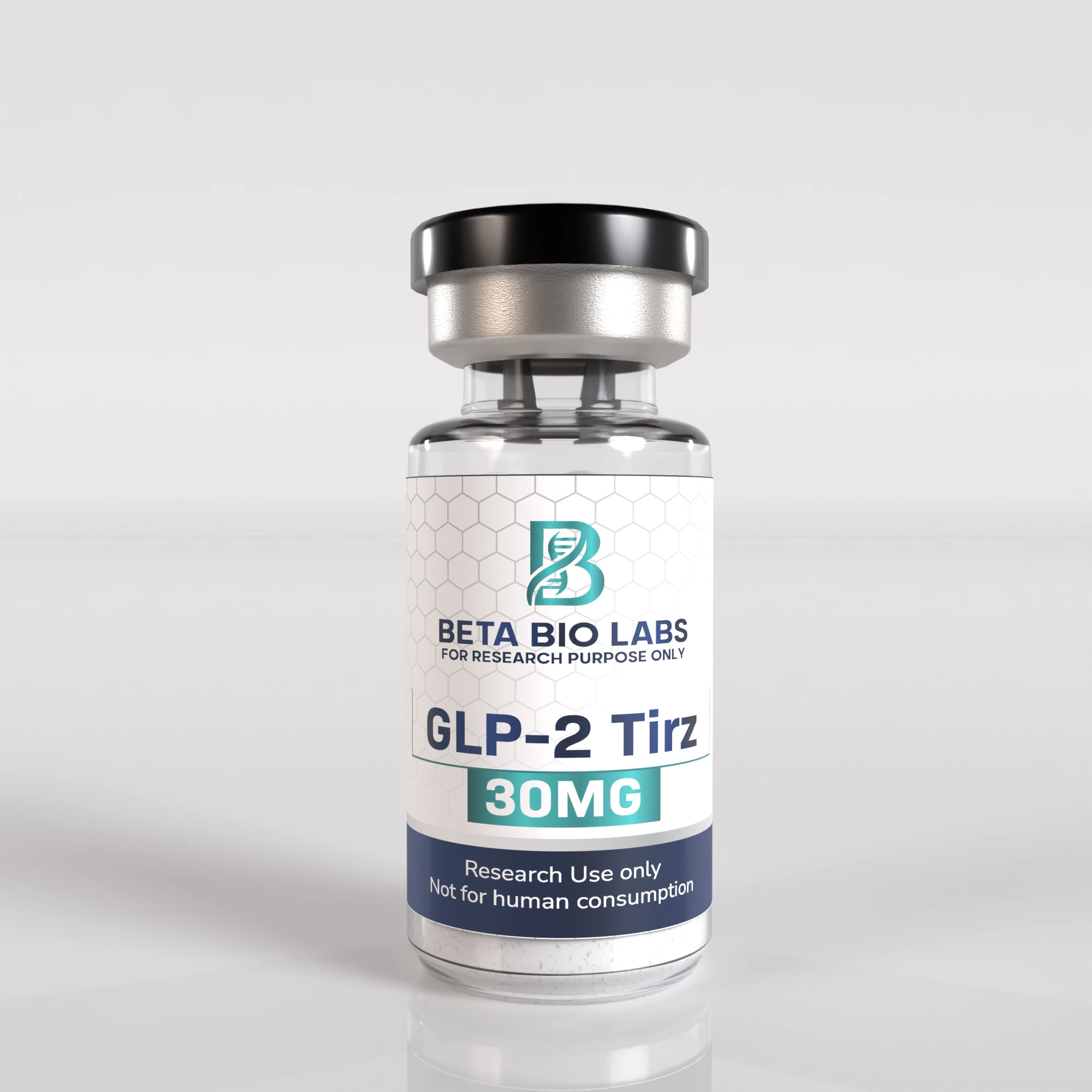
GLP-2 Tirz: A Research-Only Peptide for Investigational Applications
Tirzapetide (commonly referred to as GLP-2 Tirz) is a peptide under investigation in preclinical and early clinical research settings. This peptide is structurally derived from glucagon-like peptide-2 (GLP-2), which is known for its role in intestinal homeostasis and growth. GLP-2 Tirz has been explored in academic and pharmaceutical research contexts for its potential effects on gastrointestinal function, but it is important to note that it remains strictly within the research-use-only category and is not approved for therapeutic, cosmetic, or diagnostic applications.
Research Context
GLP-2 was first identified for its role in promoting intestinal growth, mucosal repair, and gut motility. Over the years, modifications of GLP-2, including Tirzapetide, have been investigated for potential therapeutic advantages, particularly in conditions where gut function and integrity may be compromised. In preclinical studies, GLP-2 variants have shown promise in areas such as inflammatory bowel disease (IBD), short bowel syndrome, and intestinal barrier dysfunction. However, further research is necessary before any therapeutic implications can be confirmed.
Research Overview
Tirzapetide (GLP-2 Tirz) is a synthetic peptide analog designed to retain or enhance specific biological effects of GLP-2 while potentially altering pharmacokinetic properties for research applications. While its full mechanism of action is still under investigation, it has been studied for its potential to influence intestinal adaptation, immune modulation, and wound healing. Due to its structural similarity to endogenous GLP-2, Tirzapetide has been evaluated in models of gastrointestinal injury, metabolic studies, and pharmacological profiling. It is essential to recognize that this peptide is intended solely for laboratory investigation and not for human or veterinary use.
Key Research Focus Areas
- Gastrointestinal Homeostasis: Investigations into its role in intestinal growth, mucosal repair, and barrier function.
- Metabolic and Endocrine Effects: Exploration of its potential interactions with glucose metabolism and pancreatic hormones.
- Inflammatory and Immune Responses: Evaluation of its impact on immune cell activity and inflammation in gastrointestinal diseases.
- Pharmacokinetics and Safety Profiles: Study of peptide stability, absorption, and toxicity in preclinical models.
- Preclinical Toxicity and Efficacy Studies: Assessing its effects on organ systems, including the liver, kidneys, and cardiovascular system.
Important Safety and Compliance Reminder
This peptide is provided for research purposes only and must be used exclusively within an approved academic or institutional research framework. Any deviation from proper research protocols is strictly prohibited. Users must adhere to all applicable regulatory guidelines, ethical standards, and laboratory safety protocols. Unauthorized distribution, possession, or use for any non-research purpose—including human, animal, or commercial applications—is a violation of law and poses significant risks.
For research use only. Not for human or animal consumption.
| Size | 30MG, 60MG |
|---|



Reviews
There are no reviews yet.